
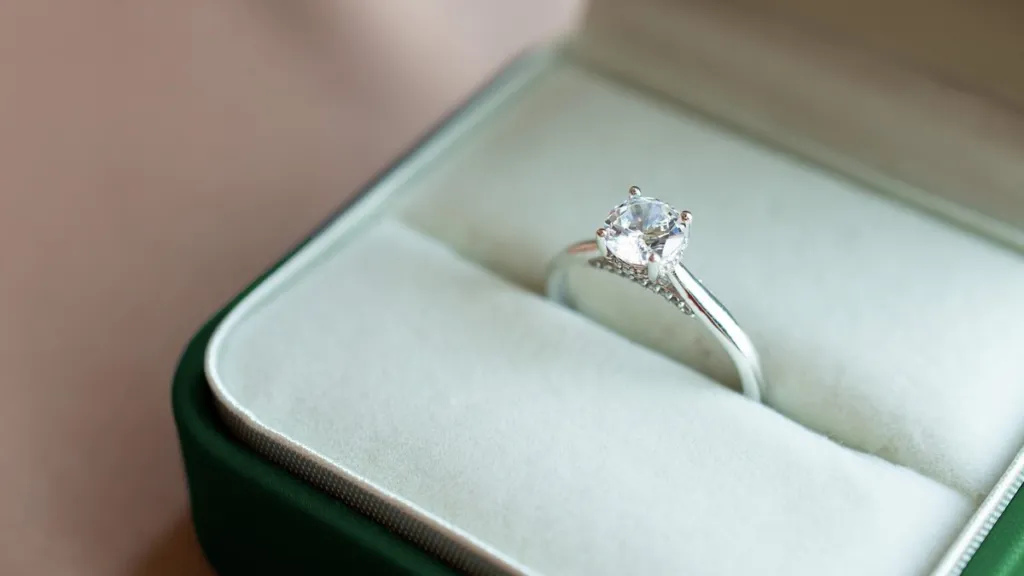
Colored gemstones offer a distinctive alternative to traditional diamond center stones. Engagement rings in different colors have different strengths and offer distinct features, providing a different design option. Your chosen color should match your personality and taste in your engagement ring. The following are some gemstones worth exploring when planning a distinctive ring:
Choose Sapphire
Sapphires come in a variety of colors, including blue, pink, and yellow, giving you multiple ring options. They are as hard as 9 on Mohs’ scale and are durable for everyday use. Combined with diamond accents, the sapphire center stone can create a perfect contrast, which will not distract from the main stone. From the traditional blue stone to a more out-of-the-box color, there’s lots of scope for personal expression with sapphire.
Explore Ruby
Red rubies add a unique red hue to engagement rings, offering a bold contrast to the classic clear stones. Like sapphires, they rank nine on the Mohs hardness scale, making them suitable for frequent wear. The color can range from pinkish red to deep red from one stone to another.
The setting will change how the ruby looks in the finished piece. Warm red shades work best with yellow gold, and white gold will make a dramatic contrast. A halo setting features smaller stones around the ruby, while a solitaire setting focuses on the central gem.
Discover Emerald
Emeralds come in brilliant green shades that work well in both retro and modern jewelry designs. During formation, natural inclusions form, known as the stone’s garden, further enhancing the stone’s uniqueness. Emeralds have an internal fracture that makes them more susceptible to damage, which puts them in the 7.5 to 8 range on the Mohs hardness scale.
Emerald cuts have broad, stepped facets, while oval cuts have a more oval shape. Some settings can also help to buffer sensitive edges from impact. Protective settings can also help protect susceptible edges from direct impacts.
Regular inspection helps identify a loose setting or early damage before you lose the stone. Emeralds need to be cleaned, especially if treatments have been used to enhance transparency. Ask a jewelry expert what treatments the stone underwent and how to care for it.
Select Morganite
Morganite is found in pastel shades of pink to peach, and it works well in combination with rose gold and warm-toned metals. Morganite has a hardness rating of 7.5 to 8, making it suitable for rings as long as you care for it. The stone isn’t distractingly bright and can be used in solitaire ring designs or as accents alongside diamonds. There are a few design considerations to keep in mind when coming up with a morganite ring design, including:
- Metals used. Peach or pink morganite goes well with rose gold.
- Type of protective setting. The bezel setting protects the vulnerable edges.
- Shape of the stone. The stone shape can be either oval or cushion.
- Maintenance. Regular inspections and gentle cleaning help keep the stone in good condition.
Create Your Ideal Engagement Rings
Your gemstone should reflect your personality and meet your standards for wear and tear. The ring you finally get depends on the metal chosen, the design of the ring, and the upkeep needed. An experienced jeweler will know all the differences in gemstones. Get expert help in choosing your gemstone and making your engagement ring according to your style, budget, and lifestyle.