

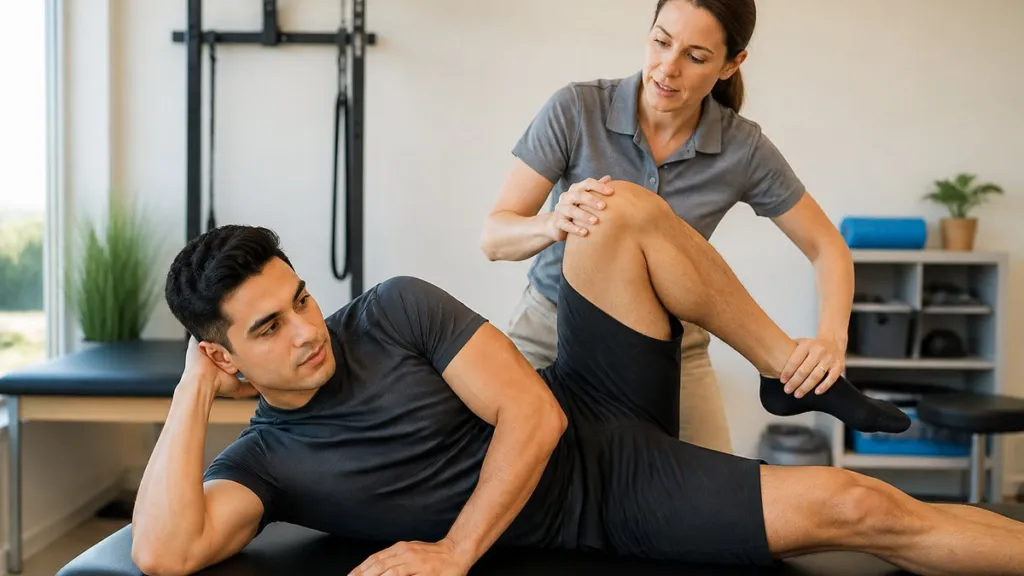
Physical therapy uses guided exercise and hands-on techniques to support healing after an injury. A licensed physical therapist studies how your injury affects movement before building a treatment plan. Sessions are typically short, and plans include exercises to do at home. Typical reasons for referral include sprains, strains, fractures, and recovery after surgery.
Improving Flexibility
After an injury, scar tissue and swelling may limit how far a joint moves. Tight muscles also restrict motion and alter your movement patterns. Stretch slowly until you feel mild tension, not pain. Your physical therapy sessions may involve several methods, and each one targets a specific need. Try these methods:
- Gentle static stretches that are held
- Dynamic stretches that move a joint through its range
- Soft tissue massage to loosen tight areas
- Gentle heat before stretching to warm the muscles
Strengthening Muscles
Injured muscles may weaken during rest, and nearby muscles take on extra work. This imbalance can strain other joints over time. When your therapist assesses strength, they test each muscle group and compare your injured side to the healthy side.
Early exercises use your own body weight because tissues need time to adjust to load. Resistance bands come next, and light weights may follow later. Your therapist adjusts the difficulty based on pain levels and progress. For a knee injury, this might include wall sits and step-ups.
Consistency matters more than intensity in strength training. If an exercise causes sharp pain, stop and tell your therapist at the next visit. Mild soreness is normal after sessions, but it typically fades shortly.
Restoring Mobility
Mobility covers daily tasks like walking, bending, and climbing stairs, and an injury may disrupt any of them. Since each injury differs, your therapist sets mobility goals that match your daily routine. A desk worker and a construction worker need different plans.
While you work on mobility, your therapist may also use joint mobilization. This hands-on technique gently moves a stiff joint in specific directions. Functional drills mimic real tasks, and they let you practice motions like reaching or squatting.
Improving Balance and Gait
Gait refers to your walking pattern, including stride length and foot placement. Lower-body injuries change your gait because you shift weight away from the painful area. This shift may persist after healing, and it may raise your risk of falls. Balance and gait training often includes the following activities:
- Standing on one leg, first with support
- Walking heel to toe along a straight line
- Stepping over small obstacles
- Practicing on foam pads or uneven surfaces
Exercises start in a safe setting, and your therapist stays close to prevent falls. Some therapists record video to study changes in your stride. If you use a cane or crutches, your therapist will check the fit and teach proper use.
Schedule Physical Therapy Session
If an injury still limits your movement after initial care, ask your provider about a physical therapy referral. Some people get direct access to a therapist, but your insurance plan may require a referral. Call your insurer to confirm coverage, visit limits, and availability before your first session. Bring your imaging results, medication list, and a description of your symptoms to the first appointment.